
Dynamic Alerts
Know when the facts turn —
before the price does.
A price alert fires after the damage. Dynamic alerts watch the evidence underneath your thesis — margin prints, guidance language, filing changes, news flow — and nudge you to re-underwrite the moment a pillar comes under pressure.
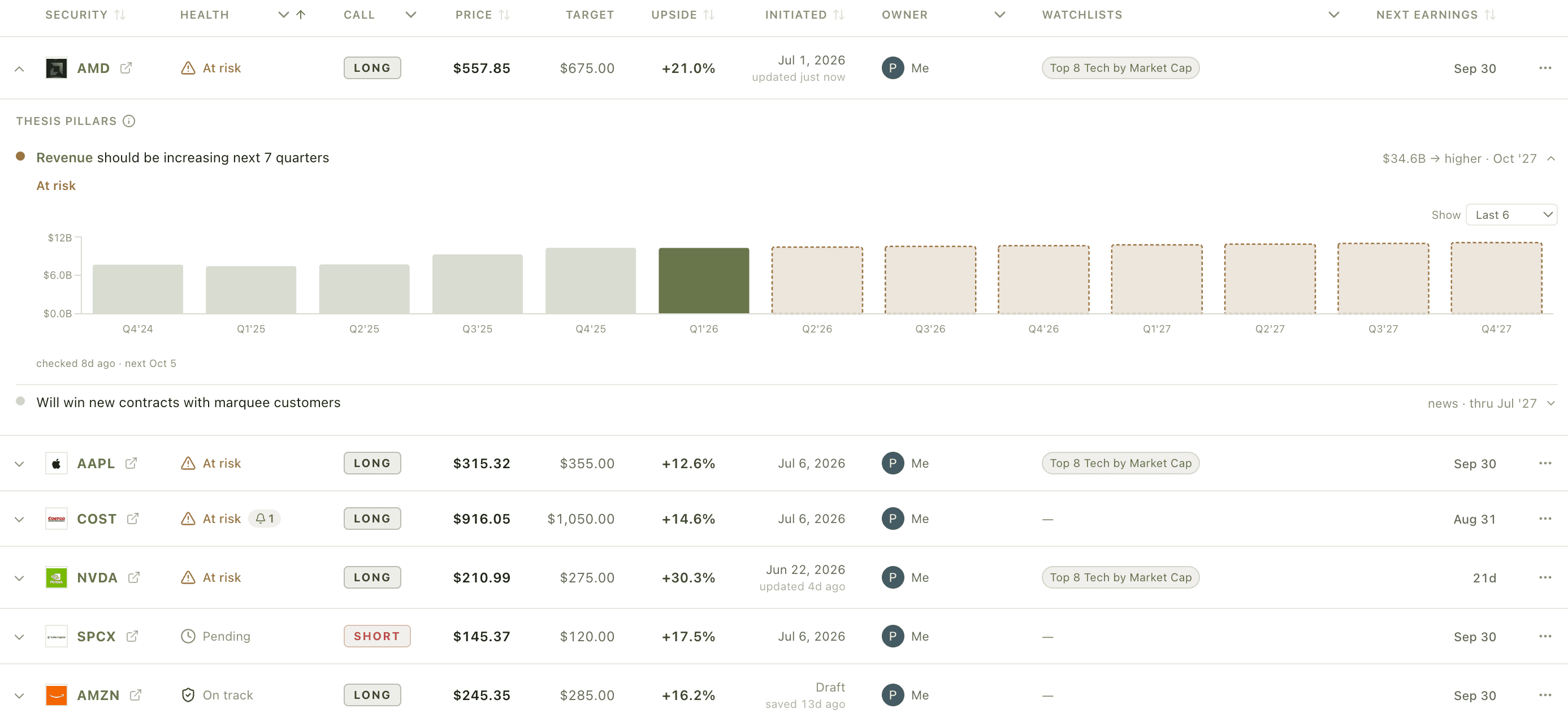
Always on
Monitoring starts when the thesis does
There is no "publish" step and no alert setup wizard. The moment you save a pillar, the AI binds it to the metrics and news streams that can test it — and from then on, every print, filing, and headline in your universe is checked against your specific claims.
- Pillars bind to live data automatically on save
- Earnings, guidance, SEC filings, and news all feed the checks
- Coverage scales — the system reads everything so you don’t have to
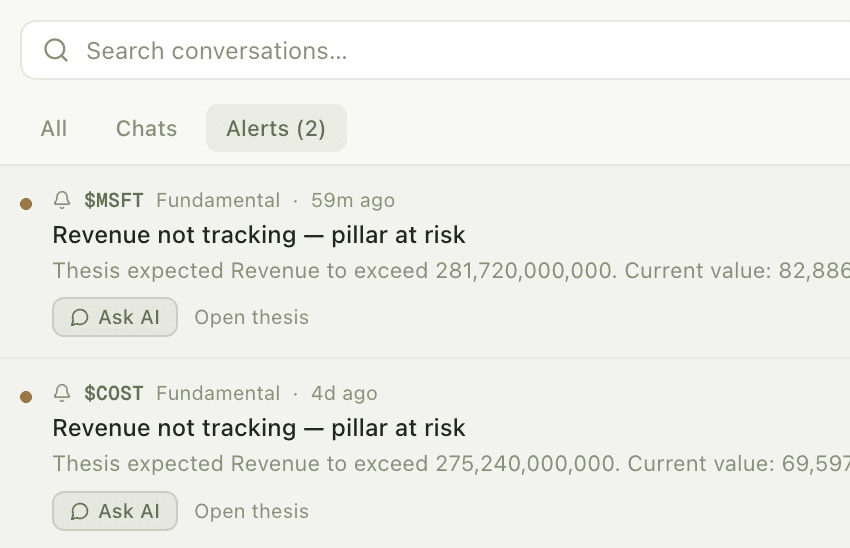
See it in context
Every thesis, right from your portfolio
Your portfolio is the command center: each position carries its live thesis, pillar health, and open alerts side by side. Scan the whole book at a glance, spot which names are under pressure, and jump straight into the thesis to re-underwrite — no hunting across screens.
- Positions and their theses live together in one view
- Pillar health rolls up so a glance shows portfolio-wide risk
- Open a thesis from any holding to update, rate, or close
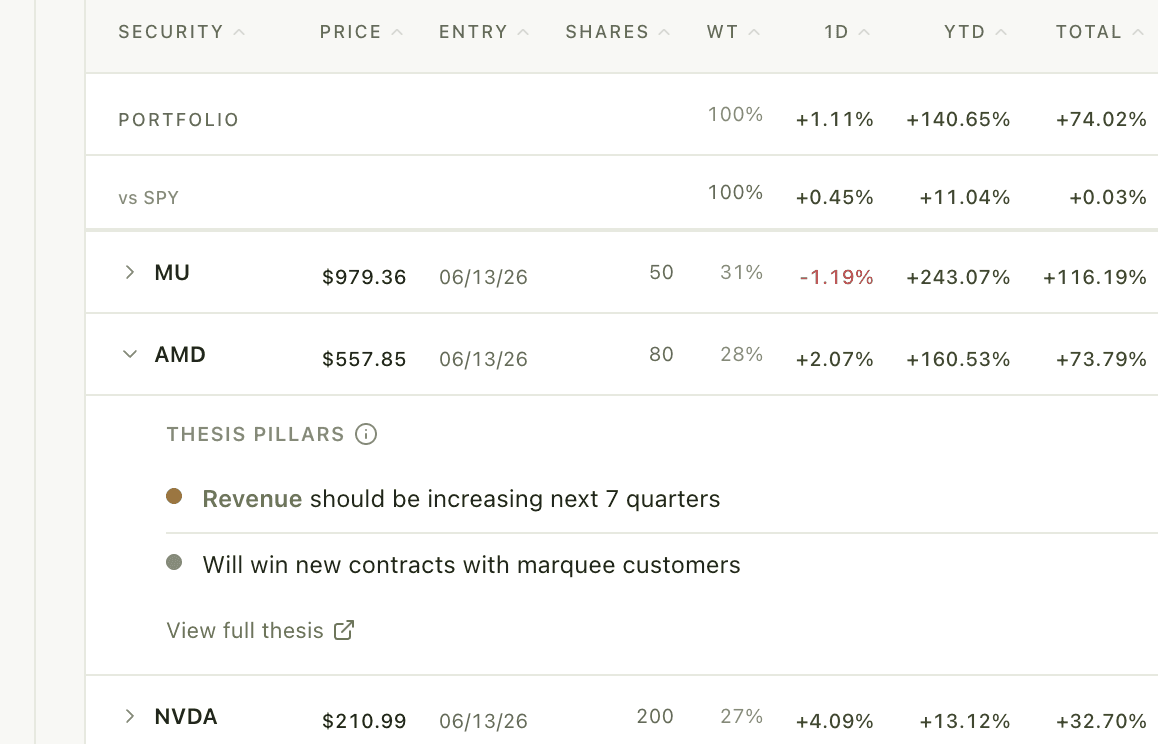
Qualitative + quantitative
Alerts that read the news, not just the tape
Some thesis breaks show up in numbers; many show up in language first — a trimmed guide, new risk-factor wording, a competitor announcement. The AI evaluates qualitative evidence against your pillars the way an analyst would, and tells you what it found and why it matters.
- Quantitative floors and ceilings checked against every print
- News and filings assessed qualitatively against each pillar
- Every alert explains the evidence, not just the trigger
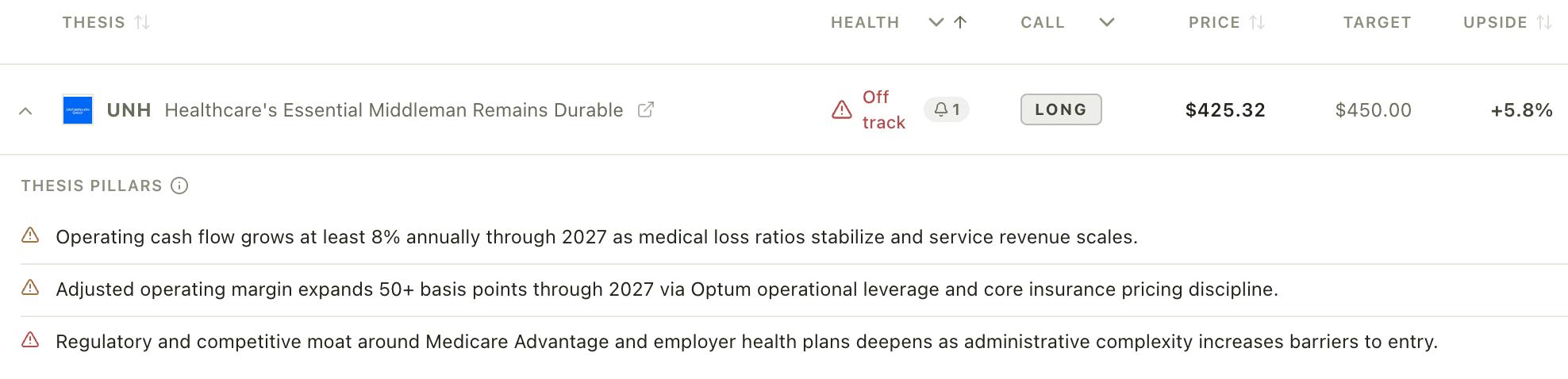
At a glance
Evidence-driven triggers
Alerts fire on the facts under your thesis — prints, guidance, filings — not just price levels.
News-aware checks
Headlines are evaluated against your specific pillars, qualitatively, by AI.
Pillar health states
On track, at risk, breached — the state of every claim, at a glance.
Auditable decisions
Every re-underwrite is versioned, so your process has a paper trail.
Frequently asked questions
- How are dynamic alerts different from price alerts?
- Price alerts fire when a ticker crosses a level — after the market has already moved. Dynamic alerts monitor the evidence your thesis actually depends on: earnings prints against pillar floors, guidance changes, new filing language, and relevant news — usually surfacing problems before they are fully priced in.
- Do I have to configure alerts manually?
- No. When you save a thesis pillar, the AI binds it to the metrics and news streams that can test it. Monitoring is on from that moment — there is no separate alert setup.
- What data feeds the monitoring?
- Earnings results and guidance, SEC filings, real-time news across your universe, and the live fundamentals behind each quantitative pillar condition.
- Can alerts be wrong?
- Qualitative assessments are judgments, and the platform treats them that way: every alert shows the underlying evidence and reasoning so you can agree or dismiss it. The goal is a well-argued nudge to re-underwrite, not an automated verdict.
Investment research is fragmented.
It shouldn't be.
Replace spreadsheets, scattered notes, and stale decks with a single tool.